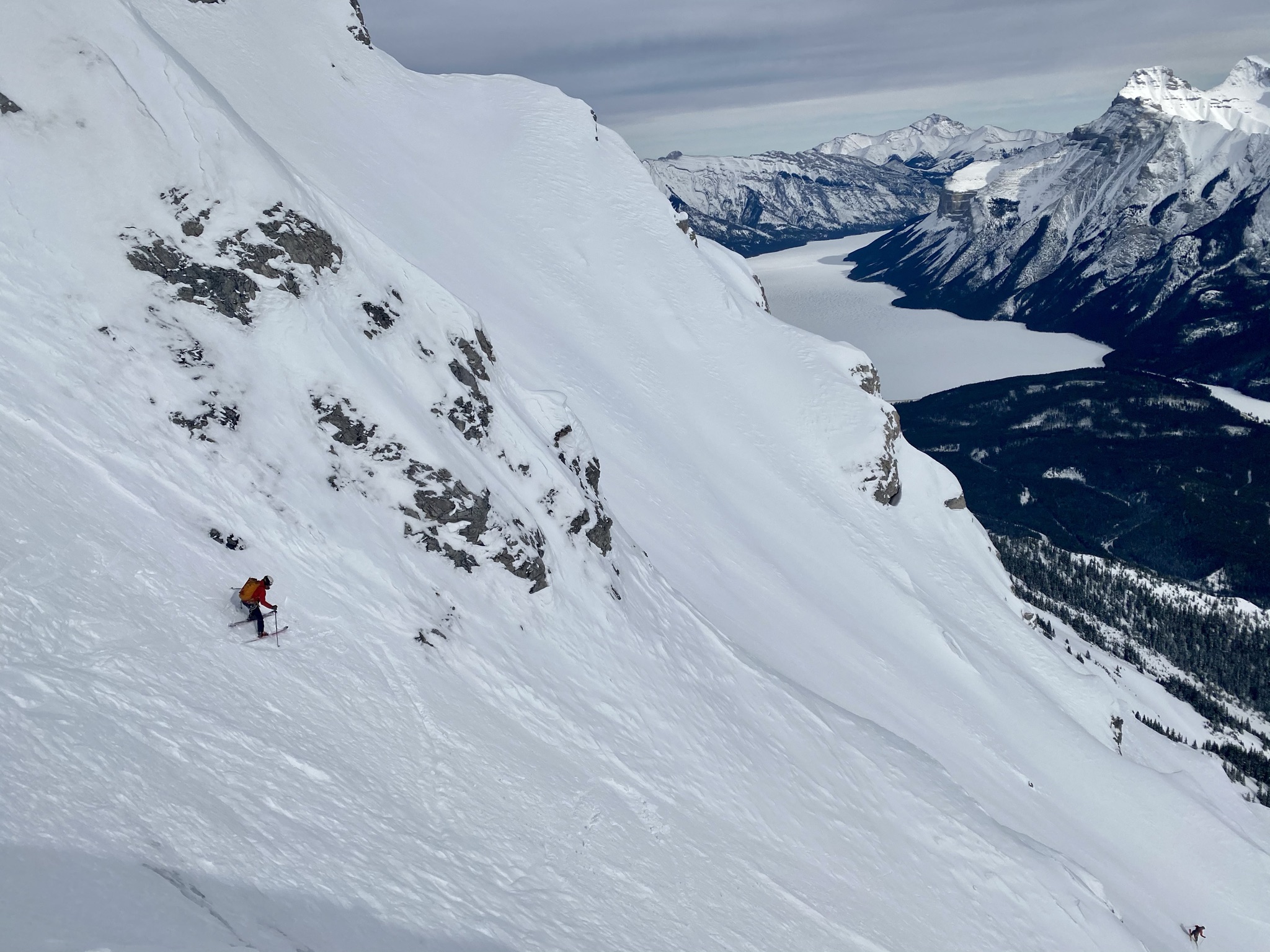
On February 18th, 2021, Kevin Rohn, Justen Bruns and myself skied the East Face of Cascade Mountain. This is the imposing face that one stares at while driving west between Canmore and Banff. Four rappels were used on the face proper.

The line of descent. Kevin Rohn Photo.
6:15 Start
The day began at 6:15 am in the Cascade Falls parking lot. From here, we set off across the airstrip towards the mountain’s South Face (the face which seems to overhang Main Street, Banff and which often gets confused for the East Face). Apart from the typical ski mountaineering gear, we carried two 5mm, 50 meter ropes and a few pins and nuts. After weeks of staring at the proposed ski line from the Lake Minnewanka Road, we hoped that we might be able to ski the face with no rappels. Still, we planned on exiting the lower mountain via the Urs Hole ice climb and knew that we would need to rappel this feature to return to the road.
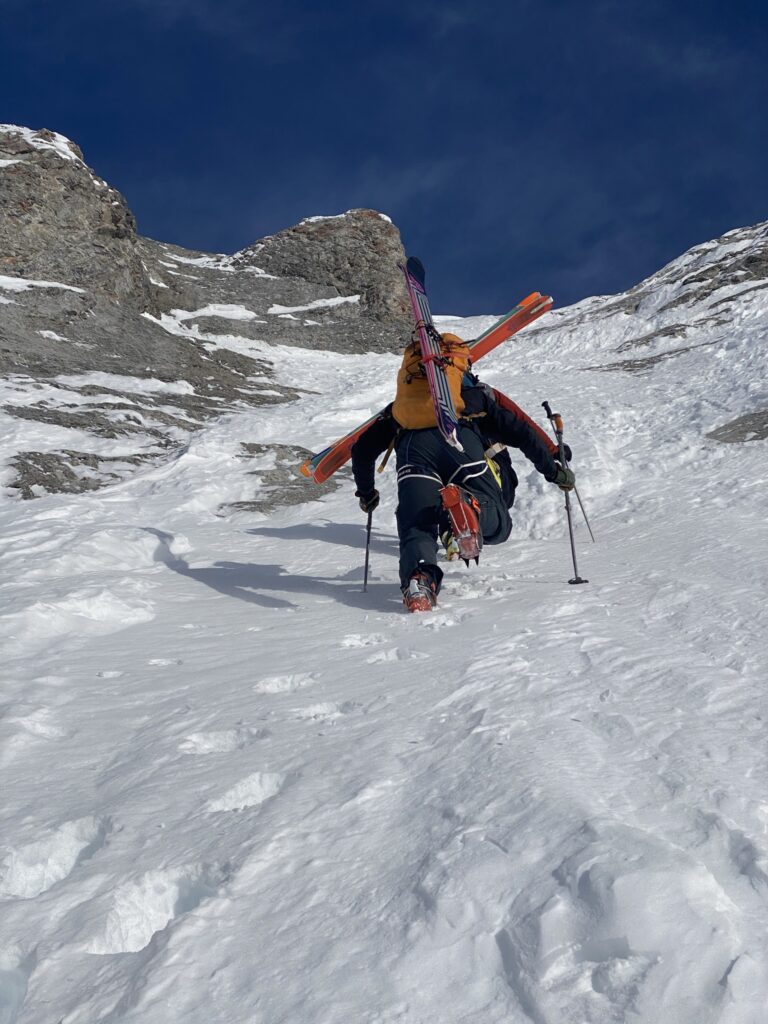
Climbing the South Face.
After four and a half hours of climbing, we topped out Cascade Mountain. The South Face was in similar shape, if not a little steeper, then the last time I went up and down it in April 2011. From the summit, our next goal was to traverse the mountain’s North Ridge towards the saddle and the start of our descent. In an ideal world, we would have skied directly from the summit, but on this day, the snow quality did not inspire us to do so.
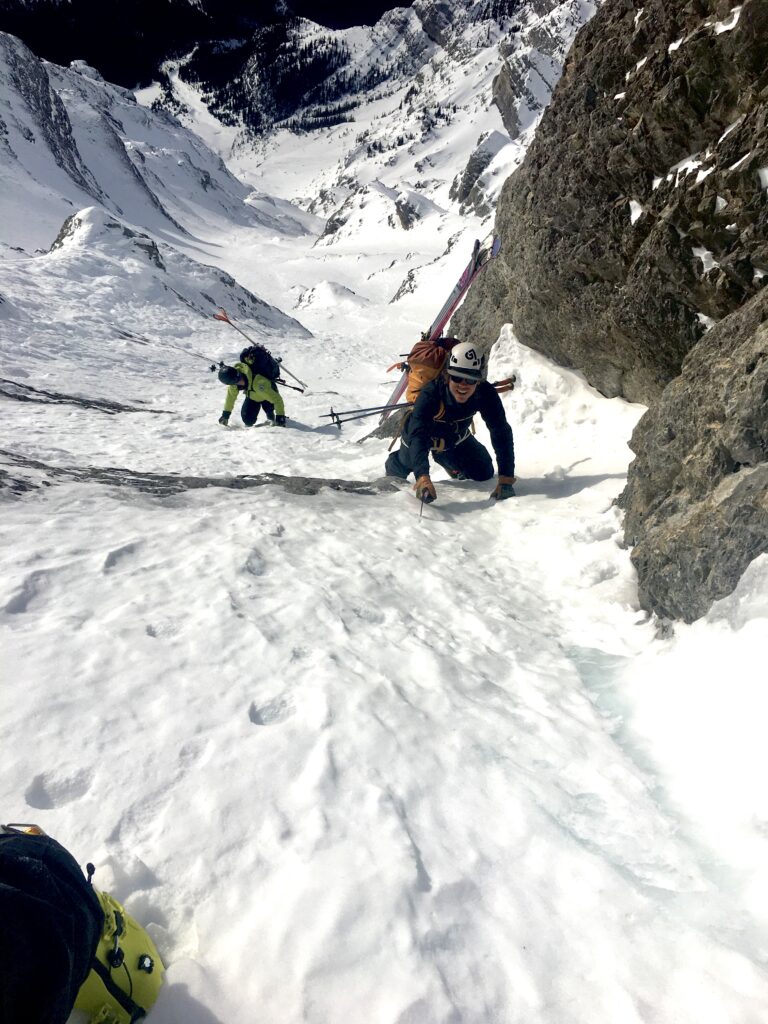
Climbing the upper South Face. Kevin Rohn Photo.
“We topped out on the summit of Cascade Mountain after four and a half hours of climbing.”
I lost track of how long it took us to finally gain the top of the line. We ended up dropping down from the ridge on the mountain’s west side, and crossed a moderately exposed snow slope before regaining the ridge and looking down the East Face. After years of staring at this face from the Trans Canada highway, it felt surreal to finally be standing here. Once on top, we transitioned into ski mode and discussed our options. The snow quality was not great but the weather and stability seemed favourable. We decided to ski down and have a look.
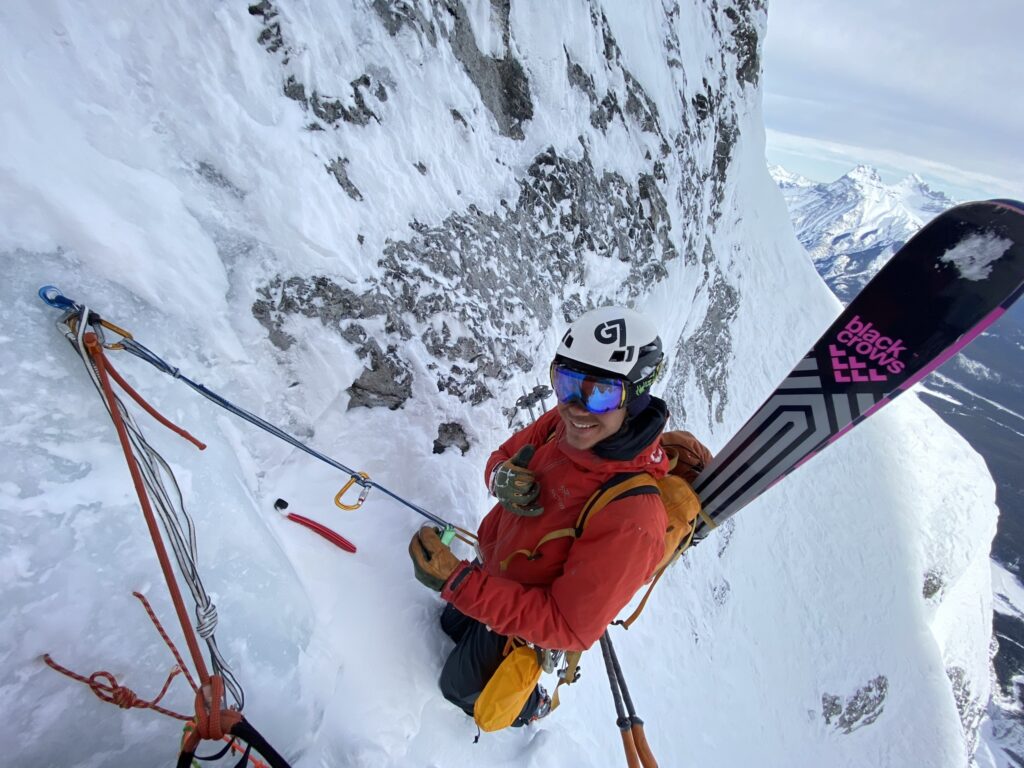
Justen hanging out at the first rappel.
The first crux
The first crux came after a few hundred meters of skiing and involved a steep pitch over a cliff. From the road, this was the section that we hoped might present a hidden passage. Once we got to it, it became clear that short of airing the cliff, we would need to find an anchor and rappel. Kevin skied first and started looking for gear in the compact rock. Justen skied second and accidentally uncovered some ice under his skis. I followed third and we built a V-thread in the exposed ice and rappelled into the heart of the face.
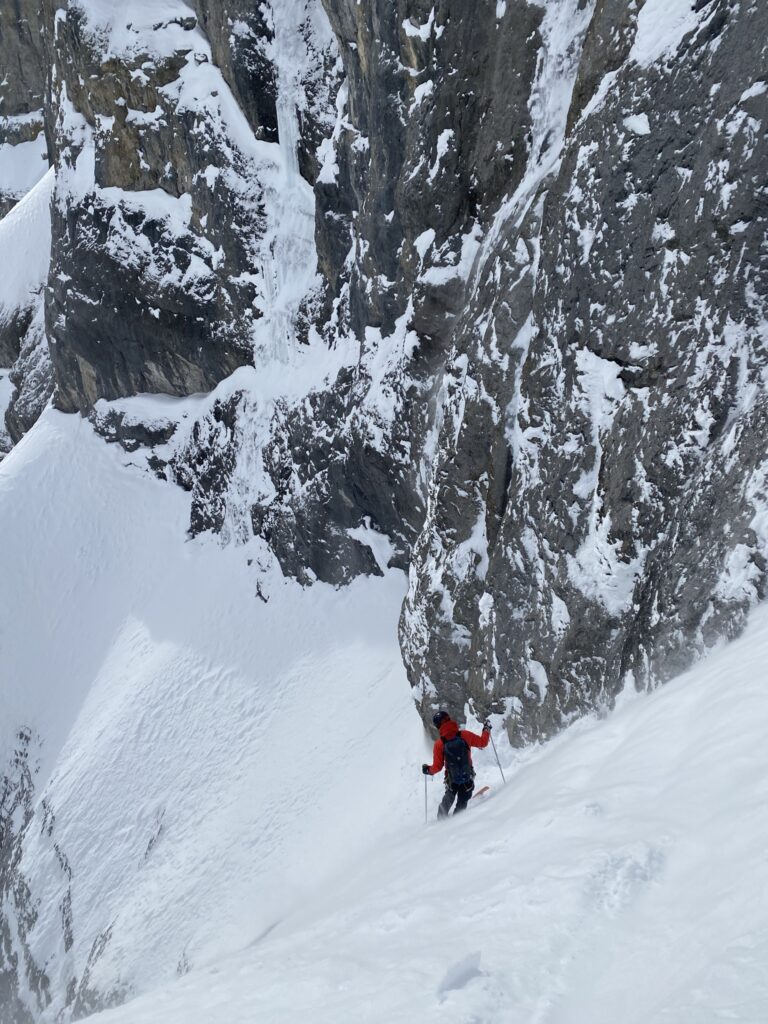
Kevin skiing down to the first crux.
The middle part of the face was fairly straight forward. The first few turns held some nice snow but then deteriorated into firmer conditions. We trended down and skiers left in order to gain passage to a ramp that would take us back right below the ice pillar. From the road, this section seemed straightforward but there were enough hidden cliffs that we ended up rappelling three more times, between ski pitches, to finally exit the upper face.
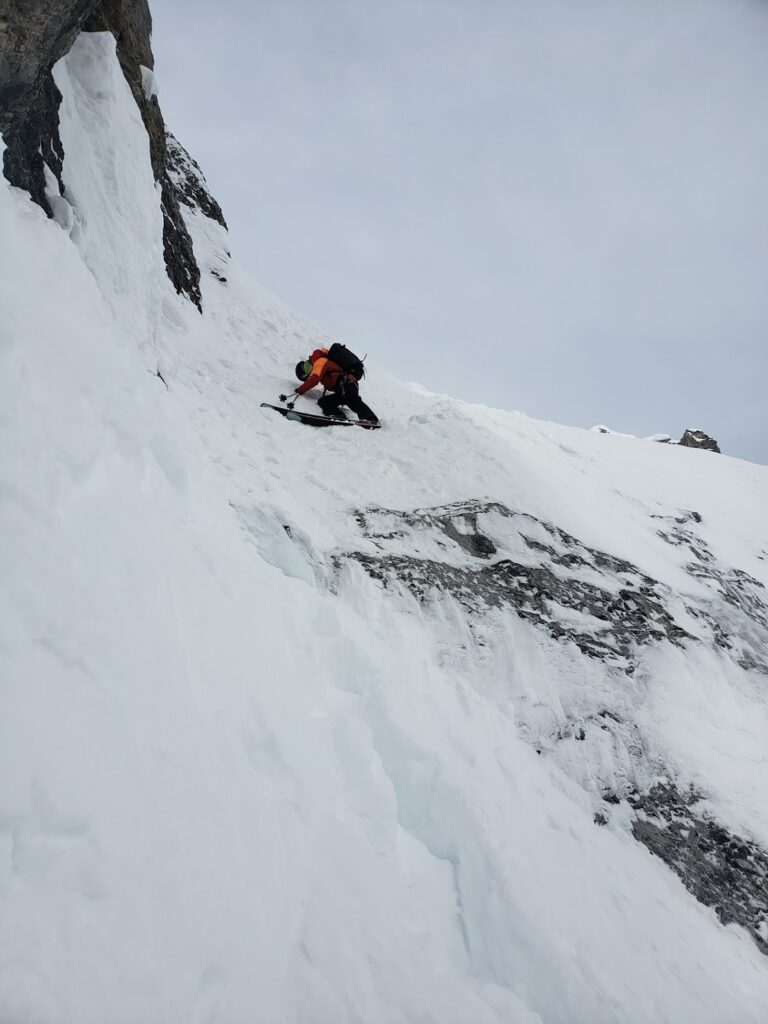
Justen’s photo from below of myself negotiating the steep pitch above the first rappel. The ice patch that we used for an anchor is just below me and looker’s left. Justen Bruns Photo.
Below the ice pillar and searching for the fourth and final anchor to escape the upper East Face.
Once off the upper face, we found the best skiing of the day (and many rocks) on our way down to the top of the Urs Hole Ice climb. Since paragliding in Banff National Park is still not permitted, we rapped and skied the ice climb and made it back to the car about 11.5 hours after leaving.
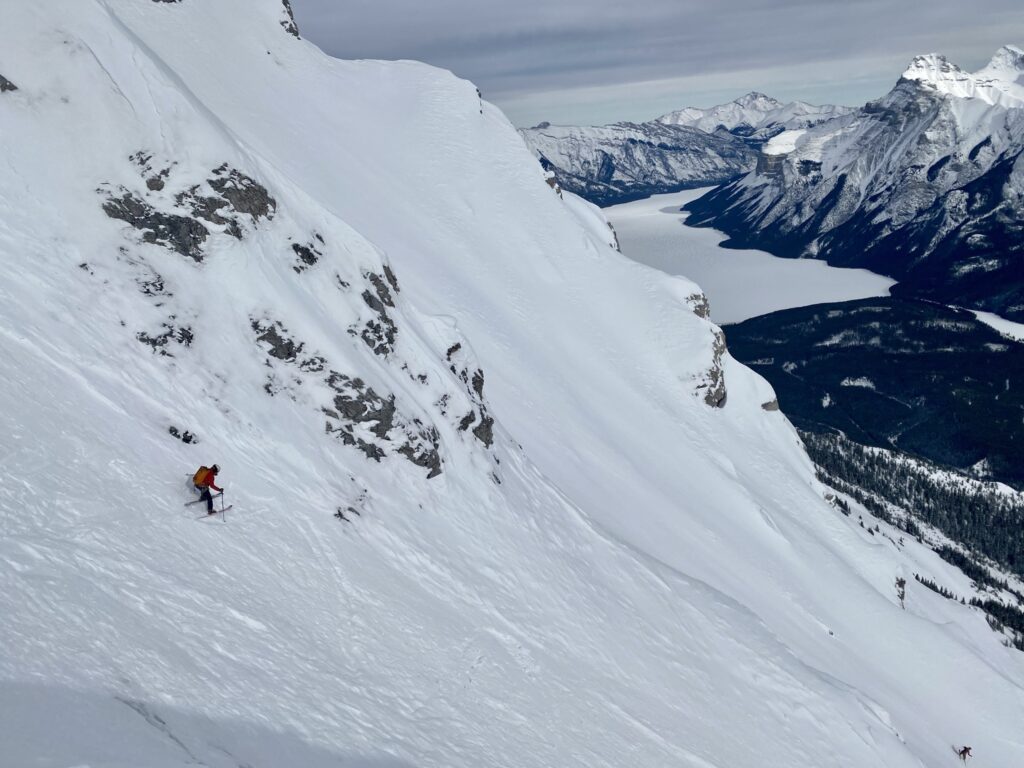
Descending the east face.
The East Face of Cascade is a classic, technical descent and I hope to ski it again from the summit, in better snow and with fewer rappels. For now, at least I can drive by it without always stopping to look up and wonder.
Thanks for the day guys!
Check out the story on Global News Canada: Read the article here!